Hawker stalls already cleared the hardest step
It's easy to assume hawker stalls are digital laggards. The data says otherwise on the specific point of payments — e-payment share at hawker centres has more than tripled in recent years, and thousands of stallholders already accept digital payments through NETS and SGQR. The harder step, digital adoption itself, is largely done. What's missing is everything that happens after the payment clears.
Chains win on scale. Hawker stalls win on relationship.
A chain outlet's advantage is resourcing — dedicated ops teams, app development budgets, centralised loyalty programmes spanning hundreds of locations. A hawker stall's advantage is the opposite kind of asset: a genuine, personal relationship between the stallholder and their regulars, built over years, that no chain can replicate at scale. The gap isn't that hawkers lack an advantage — it's that this advantage has never been captured digitally, so it can't be leveraged the way a chain leverages its loyalty data.
What a chain does that a hawker stall usually can't — yet
- Identifies repeat customers automatically — a chain's app knows who's a regular; most hawker stalls only know this by memory.
- Tracks what sells and when — chains use data to adjust offerings; hawker stalls usually rely on instinct built over years, which is valuable but not scalable to a second outlet or a busy period.
- Re-engages lapsed customers — chains can nudge someone who hasn't visited in weeks; a hawker stall has no way to even know that customer stopped coming.
Closing the gap without chain-size resources
The good news is that none of the three gaps above require a chain-sized budget to close — they require a way to capture what's already happening at the counter. A digital receipt, tapped by the customer at the point of payment, automatically creates the record a chain would otherwise need an app and a dedicated data team to build.
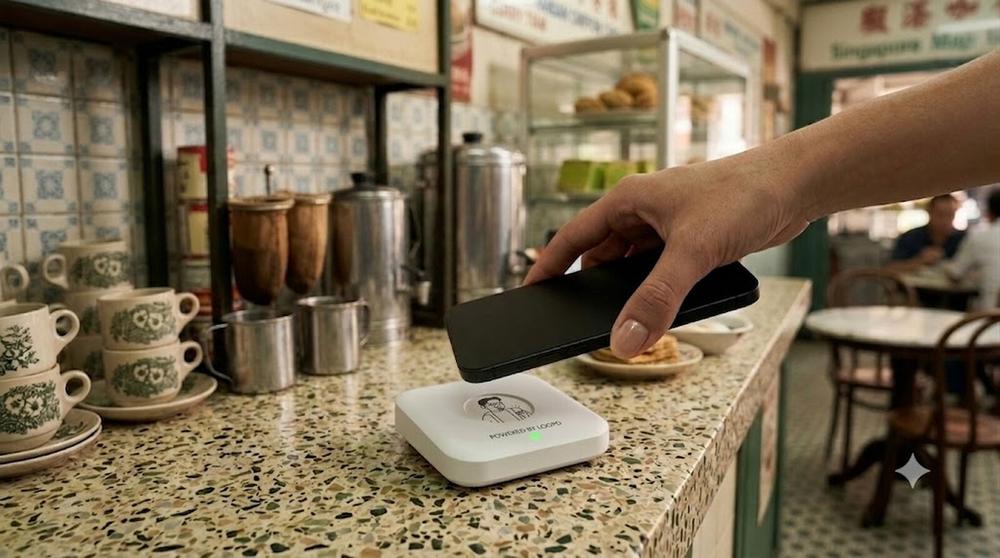
The same tap motion customers already use for payment can capture the customer relationship a hawker stall has built over years.
Why this actually favours smaller merchants
Once a hawker stall has even basic customer data — who visits, how often, what they usually order — it can act on that information faster and more personally than any chain, because the stallholder already has the relationship. A chain needs a marketing team to personalise an offer; a hawker stall just needs to know a regular is due for a visit and can act on it directly, in person, the next time they're at the stall.
The path forward for independent hawkers
Singapore's hawker stalls have already proven they can adopt digital payment tools quickly when the setup is simple and the benefit is clear. The same logic applies to the next step: digital receipts and lightweight loyalty tracking that requires no new hardware, no app for customers, and no disruption to how a stall already runs. The technology gap with chain F&B is real, but for hawker stalls, it's a much smaller gap than it looks — and closing it plays directly to their biggest advantage: the relationship chains can't buy.
See it running on your own counter
Free demo, no commitment. We bring the device to you.