Two very different speeds of digital transformation
Singapore's F&B industry is often described as a single, fast-digitising sector. The reality is two very different stories happening at once. Fast-food chains, backed by dedicated ops teams and centralised technology budgets, have digitised aggressively — self-ordering kiosks, app-based ordering, and integrated loyalty systems are now standard. Independent hawker stalls, cafes, and small F&B operators have moved far more slowly, even with direct government support behind them.
Why the gap exists even with government support
Singapore's Hawkers Go Digital programme specifically targeted the payment side of this gap, subsidising transaction fees to encourage digital payment adoption among hawker stalls. It worked, to a point — e-payment share at hawker centres has grown substantially. But growth from a low base still leaves hawker centres well behind fast-food chains, and payment adoption alone doesn't touch the rest of the digital stack: receipts, loyalty, customer data, and queue management largely remain manual at the independent end of the market.
The resource gap is the real divide
A fast-food chain can spend months integrating a loyalty platform because the cost gets spread across hundreds of outlets and justified by a dedicated digital strategy team. An independent hawker stall or small cafe owner is usually also the cashier, the cook, and the one deciding whether a new system is worth the setup time — with no team to absorb that decision. This isn't a knowledge gap; it's a bandwidth gap.
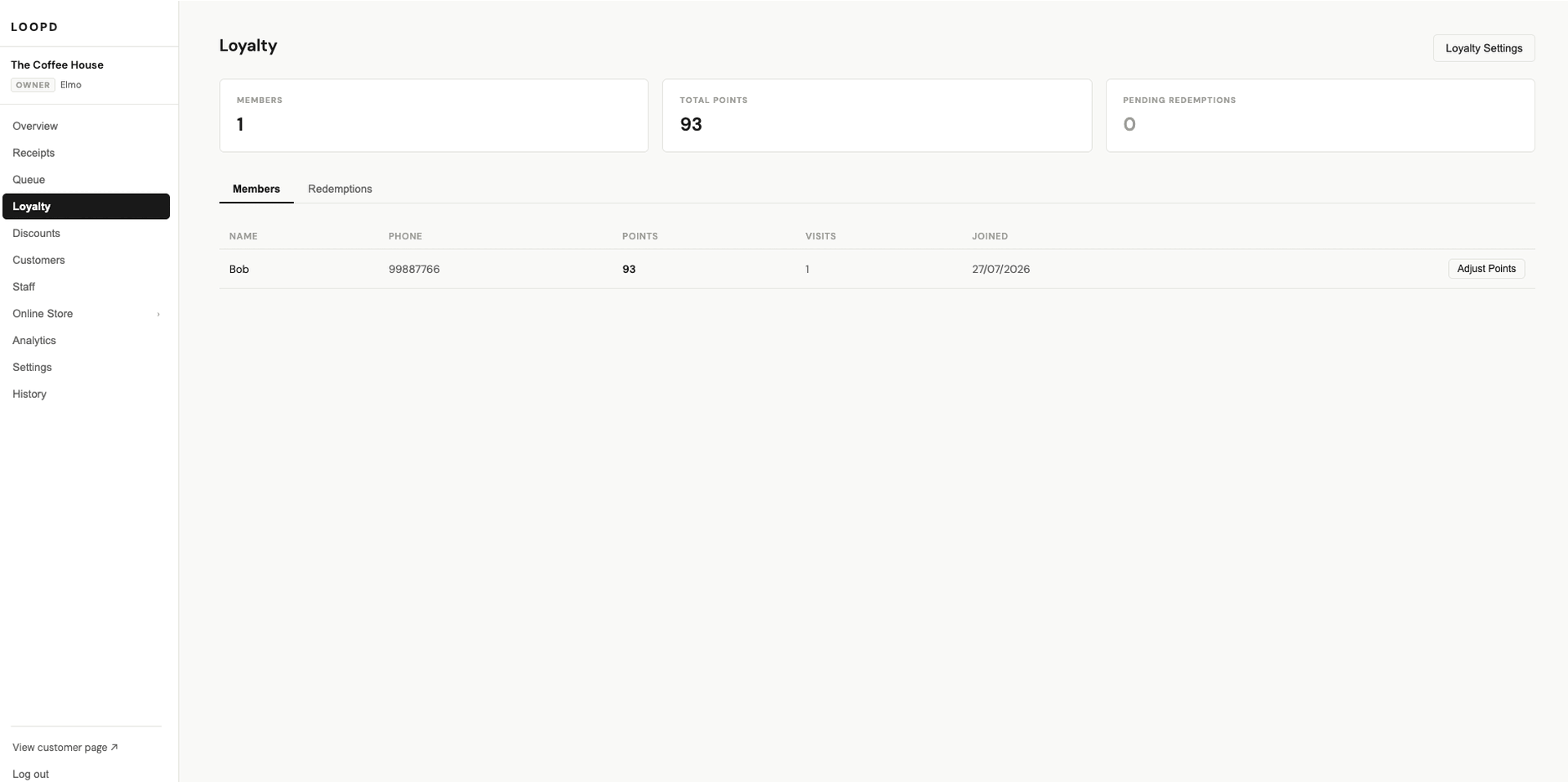
Only around 3 in 10 F&B businesses in Singapore currently have any loyalty program at all.
What being 'left behind' actually costs a small merchant
The consequence isn't abstract. Without a loyalty or CRM system, small merchants have no way to identify or reward the customers who matter most to their survival — the repeat visitors who keep a thin-margin business afloat between novelty-driven waves of new customers. Chains, by contrast, can already segment and re-target their customer base with precision. The technology gap compounds into a retention gap, and retention is what separates small F&B businesses that survive from the roughly one in ten that close within any given year.
Closing the gap doesn't require chain-level resources
- Start with what's already free or subsidised — payment digitisation support is real and worth using fully.
- Look for lightweight loyalty and receipt tools built for single-operator businesses, not enterprise chains — the resource gap narrows fast once the tool itself doesn't demand a dedicated team.
- Treat customer data as infrastructure, not a nice-to-have — even a simple automatic record of repeat visitors closes much of the practical gap with larger chains.
The opportunity for independent Singapore merchants
The digital transformation gap in Singapore F&B isn't permanent — it's a function of which tools have historically been accessible to which size of business. As lighter-weight, low-setup digital tools become available specifically for small operators, the gap between an independent hawker stall and a national chain narrows to something much more closeable than the headline statistics suggest.
See it running on your own counter
Free demo, no commitment. We bring the device to you.