A receipt prints every few seconds, all over Singapore
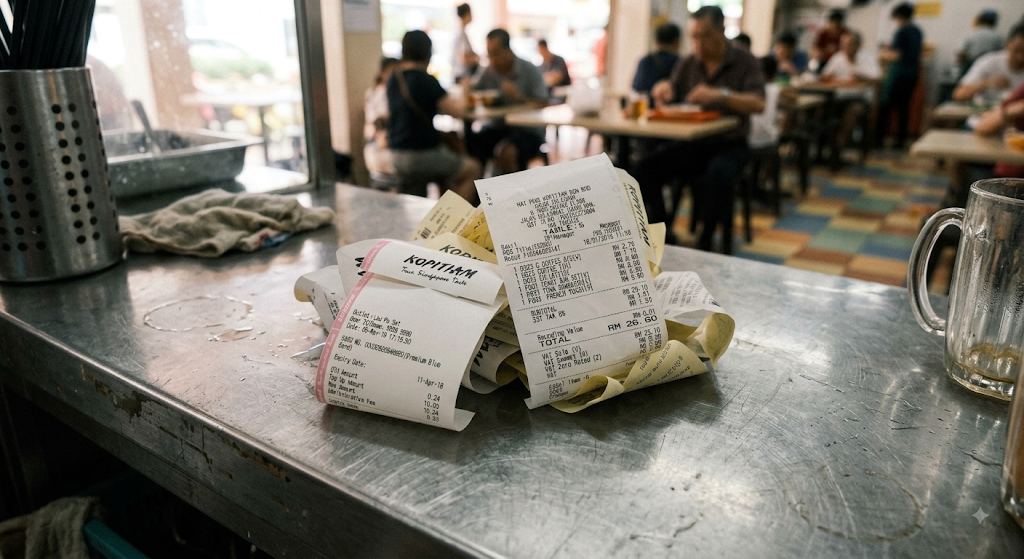
Every time a sale goes through at a hawker stall, cafe, retail counter, or clinic in Singapore, a thermal receipt prints, gets handed over, and in the vast majority of cases is thrown away within minutes. Multiply that across the tens of thousands of transactions happening across the island on any given day, and the scale of paper being used and discarded purely for receipts becomes far larger than most merchants ever stop to consider.
This isn't unique to Singapore — it's a global pattern. But Singapore's high transaction density, land-scarce waste management system, and growing sustainability push make it a particularly relevant place to look closely at what's actually happening with all this paper.
The part almost nobody realises: most receipts can't actually be recycled
Here's the detail that surprises most people: the majority of receipts printed in Singapore, like most of the world, use thermal paper — the type that doesn't use ink at all, but instead reacts to heat to form the print. Thermal paper is coated with chemical developers, commonly Bisphenol A (BPA) or similar compounds, which are what allow the paper to darken under a printer's heating element.
That coating is exactly why these receipts cannot go into a normal paper recycling stream. If they do, the chemical coating contaminates the recycled pulp, which can carry through into other recycled paper products. The standard guidance, including from recycling advisory bodies referencing Singapore's own waste directives, is that thermal receipts belong in general waste, not the blue recycling bin — meaning nearly every receipt printed ends up as pure landfill or incineration waste, with zero possibility of a second life.
The global scale puts Singapore's numbers in context
Zooming out helps put Singapore's own paper waste trajectory in perspective. Globally, receipt production alone is estimated to consume the equivalent of millions of trees a year, along with substantial water and energy inputs, purely to produce a slip of paper that's typically read once and discarded within the hour. In markets that have already started shifting toward digital-by-default receipts, such as France's anti-waste legislation restricting automatic paper receipt printing, the projected paper savings run into the millions of trees annually.
Singapore hasn't introduced comparable receipt-specific legislation yet, but the underlying pressure is the same: paper recycling rates have been falling here even as total paper waste generation remains in the millions of tons annually, and there's no realistic path for thermal receipts specifically to be part of that recycling stream at all.
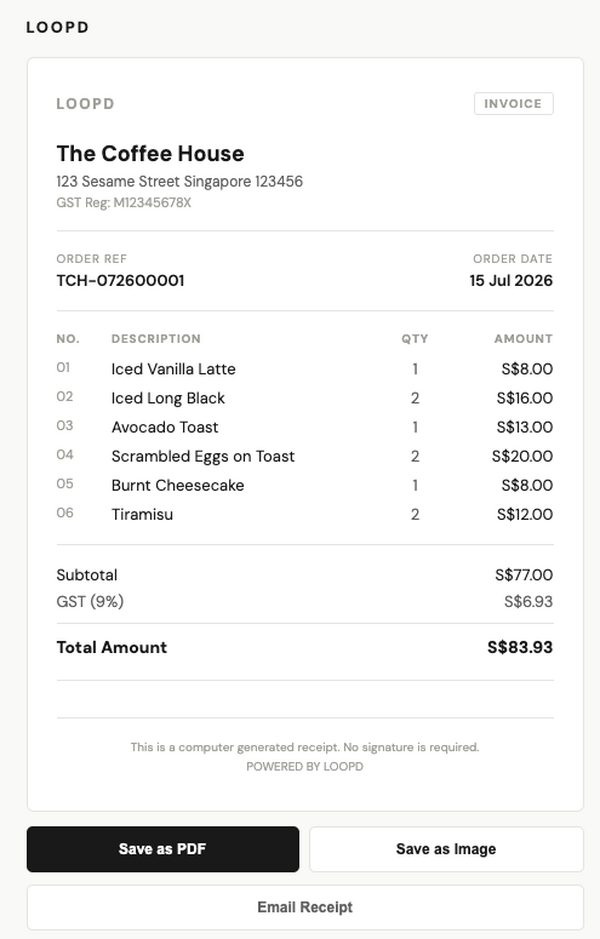
A digital receipt produces the exact same information as a paper slip — itemised purchases, GST, and totals — without the waste.
What this actually costs a Singapore merchant
Beyond the environmental angle, there's a straightforward operating cost that many merchants underestimate simply because it's paid in small recurring amounts rather than one visible bill. Thermal paper rolls are a recurring monthly cost, printer maintenance and replacement is a recurring cost, and staff time spent handling paper jams or reloading rolls during a rush is a recurring cost too — all for a piece of paper that typically ends up discarded within the hour and that Singapore's waste system can't even process as a recyclable material.
- Recurring paper cost — every roll is a small, easy-to-ignore line item that adds up continuously, for as long as the business operates
- Zero recyclability — unlike most other paper waste, thermal receipts have no recycling pathway at all under current guidance
- No data retained — once the receipt is thrown away, any record of that transaction and that customer is gone for the merchant too
The fix doesn't require a new POS system
The instinct many merchants have is that going paperless means a full technology overhaul — a new point-of-sale, new hardware, new staff training. In practice, the fix can sit alongside an existing POS entirely: the transaction is captured the same way it already is, and instead of printing to a thermal roll, the receipt is generated digitally and delivered with a single tap of a customer's phone.
This removes the thermal paper cost and its associated waste stream entirely, without requiring staff to learn a new checkout process or merchants to replace equipment that already works. The transaction itself doesn't change — only what happens to the receipt afterward.
A small device sits alongside the existing POS — no thermal paper, no new checkout process for staff.
Where this leaves Singapore merchants today
Receipt paper waste is a genuinely solvable problem, and unlike some sustainability initiatives, it doesn't require merchants to spend more, retrain staff extensively, or take on operational risk to fix. It requires recognising that the paper receipt, as a default, is a cost and a waste stream that most businesses issuing it never see clearly, because it's paid in small amounts and thrown away out of sight.
For merchants weighing whether it's worth revisiting, the two questions worth asking are simple: how much is thermal paper actually costing per month once printer upkeep and staff time are included, and where does that paper actually go once a customer walks out the door. For most Singapore merchants, the honest answer to the second question is landfill or incineration, every single time.
See a paperless setup on your own counter
Free demo, no commitment. We bring the device to you.